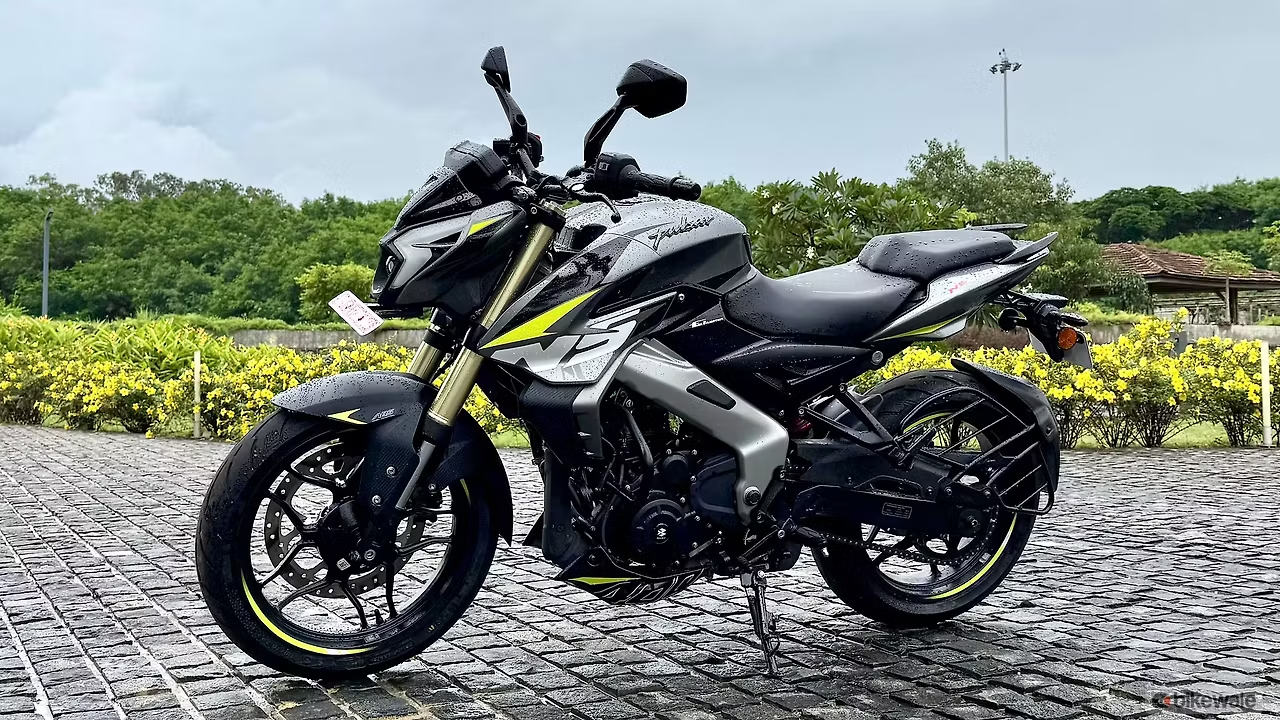
2025 Bajaj Pulsar NS400Z; Bajaj Auto has launched the 2025 Pulsar NS400Z in the Indian market. It is the flagship model in the manufacturer’s Pulsar range. The motorcycle was updated recently after taking feedback from the customers. So, what all did the company make with the Pulsar NS400Z? Here’s a quick comparison between the new and the outgoing model.
2025 Bajaj Pulsar NS400Z Overview
| Feature | Details |
|---|---|
| Engine | 373cc, liquid-cooled, single-cylinder |
| Power Output | 42.5 bhp @ 10,700 rpm |
| Torque | 35 Nm @ 7,500 rpm |
| Transmission | 6-speed gearbox with bi-directional quickshifter |
| Braking System | Front: 320 mm disc; Rear: 230 mm disc |
| Tyres | Apollo Alpha H1 radial tyres (150-section rear) |
| Ride Modes | Road, Rain, Off-road, Sport |
| Quickshifter | Bi-directional, software-driven (Sport mode only) |
| Price (Ex-Showroom) | ₹1,92,328 |
Introduction
The Bajaj Pulsar NS400Z has been a cornerstone in the affordable performance motorcycle segment. With the 2025 update, Bajaj aims to refine the NS400Z, addressing previous shortcomings and introducing features that elevate its riding experience.
Engine and Performance
The heart of the NS400Z remains its 373cc liquid-cooled, single-cylinder engine. However, Bajaj has made significant internal modifications, including revised valve timing, cam profiles, and a forged piston. These enhancements boost power output to 42.5 bhp at 10,700 rpm, up from the previous 39.5 bhp. Torque remains at 35 Nm, delivered at 7,500 rpm. The redline has been increased by 1,000 rpm, providing a more spirited performance. The engine delivers a smooth powerband, with minimal vibrations, making it suitable for both city commuting and spirited rides.
Transmission and Quickshifter
A notable addition is the bi-directional quickshifter, a first in this segment. Unlike traditional sensor-based systems, Bajaj employs a software-driven approach that interprets shift intent through the gear-position sensor. While the system is limited to Sport mode and may feel jerky at lower revs, it performs admirably at higher speeds, offering clean, clutchless upshifts and rev-matched downshifts. This feature enhances the motorcycle’s performance-oriented character.
Ride Modes and Electronics
The NS400Z offers four ride modes: Road, Rain, Off-road, and Sport. Each mode adjusts throttle response, traction control, and ABS intervention. Sport mode unlocks the full 42.5 bhp, with sharper throttle mapping and enables the quickshifter. Rain and Road modes provide more subdued power delivery, ideal for city commutes or slippery conditions. Off-road mode relaxes traction control, allowing some wheel slip on loose surfaces. These electronic aids contribute to a versatile riding experience across various conditions.
Braking and Tyres
The braking system comprises a 320 mm front disc and a 230 mm rear disc, providing strong stopping power. The introduction of Apollo Alpha H1 radial tyres, with a 150-section rear, offers improved grip and stability, enhancing cornering confidence and overall handling.
Design and Ergonomics
The 2025 NS400Z retains its aggressive styling, characterized by golden USD forks, a muscular stance, and signature lightning-shaped DRLs paired with a mono projector headlamp. While the design remains largely unchanged, it continues to command attention on the road. The ergonomics are tailored for spirited riding, with a comfortable riding posture suitable for both city and highway use.
Conclusion
The 2025 Bajaj Pulsar NS400Z stands as a testament to Bajaj’s commitment to refining and enhancing its flagship motorcycle. With increased power, advanced electronics, and performance-oriented features, it offers a compelling package for enthusiasts seeking an affordable yet exhilarating riding experience.